
Southern Skillet Corn Bread Recipe
This classic southern skillet corn bread recipe is easy to make and ideal for pairing with all kinds of grilled camping favorites!
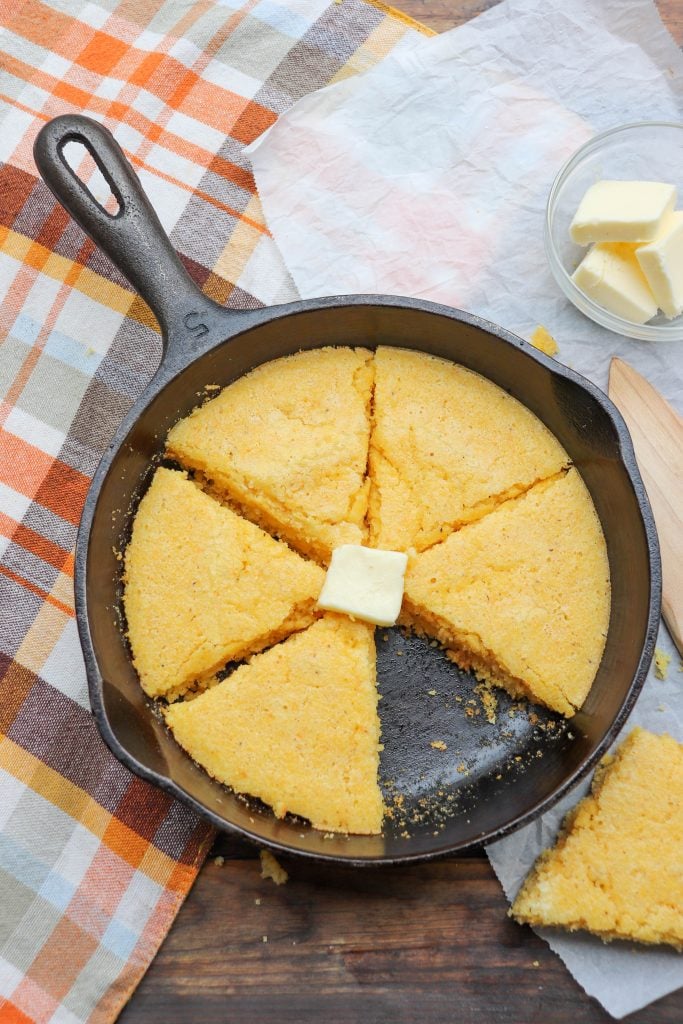
Corn bread is a southern staple. Add some pinto beans and collard greens, and you’ve got a meal many in the southern states consume on a regular basis.
Here, we don’t eat beans and greens much. Instead, a classic corn bread is more likely to accompany a bowl of chili or homemade soup.
Too busy to make this right away? Pin it for later! Pin this post to your favorite board on Pinterest and it will be there when you’re ready!
There are so many delicious recipes for corn bread today. There are both northern corn breads and southern-style corn bread.
Some recipes are on the sweet side, some swear off sugar completely. You can use yellow or white cornmeal, with many recipes calling for a combination of cornmeal and flour.
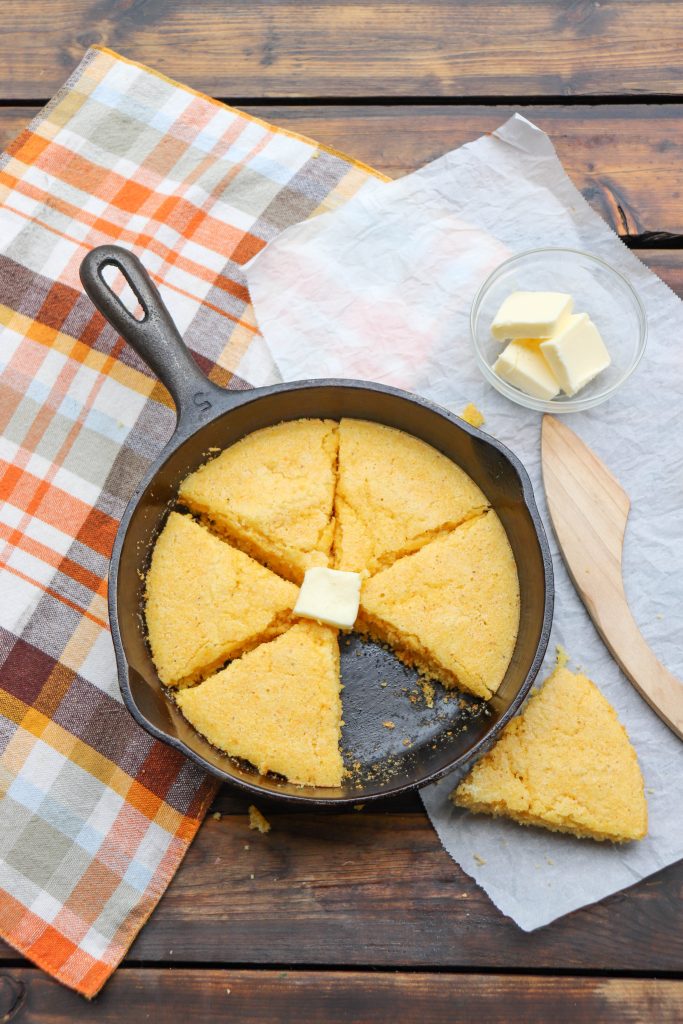
Each family and region has their own adaptation that makes their favorite corn bread recipe unique. What they all have in common is simple ingredients that come together quickly, just like today’s recipe.
This post contains affiliate links.
Supplies
Southern Skillet Corn Bread Recipe
Ingredients
- All-purpose flour – Helps give the cornbread enough structure to hold together while staying tender.
- Yellow cornmeal – The star of the show, adding that classic corn flavor and rustic southern texture.
- White sugar – Sugar in corn bread is controversial, but we love it in this recipe. It doesn’t make the bread sweet, but rather more flavorful.
- Baking powder – Gives the corn bread a gentle lift so it’s not dense or heavy.
- Baking soda – Works with the buttermilk to create a soft, fluffy crumb.
- Salt – Balances the flavors and keeps the corn bread from tasting flat.
- Butter, melted – Adds rich flavor and helps create those irresistible golden edges in the skillet.
- Buttermilk – Brings moisture and a slight tang that makes this recipe extra crave-worthy.
- Eggs – Bind everything together and give the bread its classic, sliceable texture.
Note: Be sure that the skillet is well seasoned with olive oil before using. This will help to prevent the bread from sticking to the pan.
Instructions
1. Preheat oven to 350 degrees F. Season the skillet with olive oil.
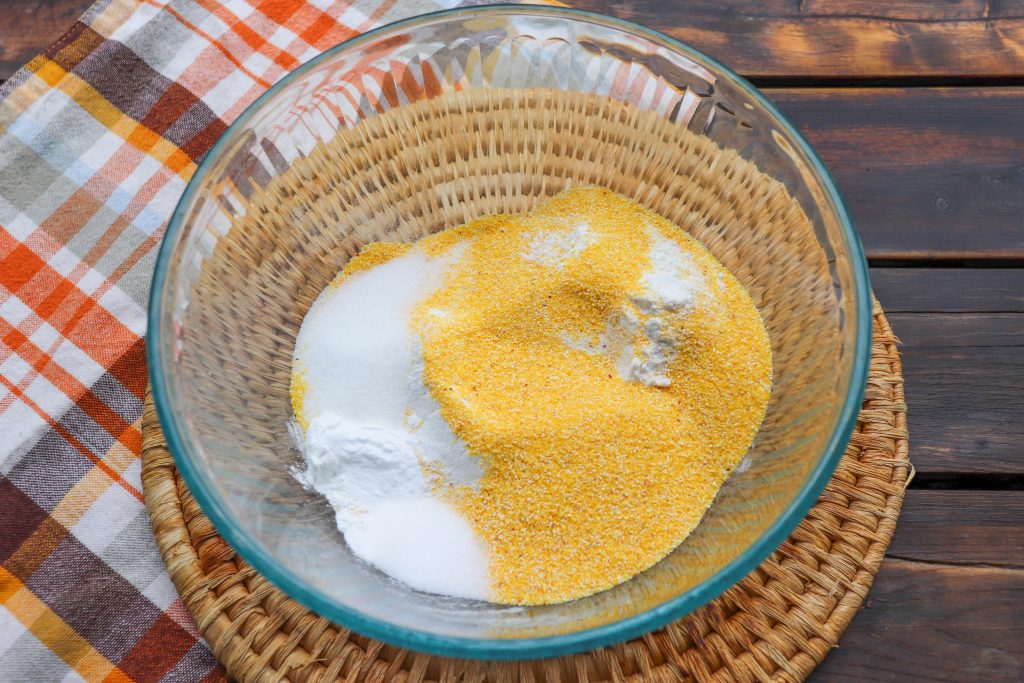
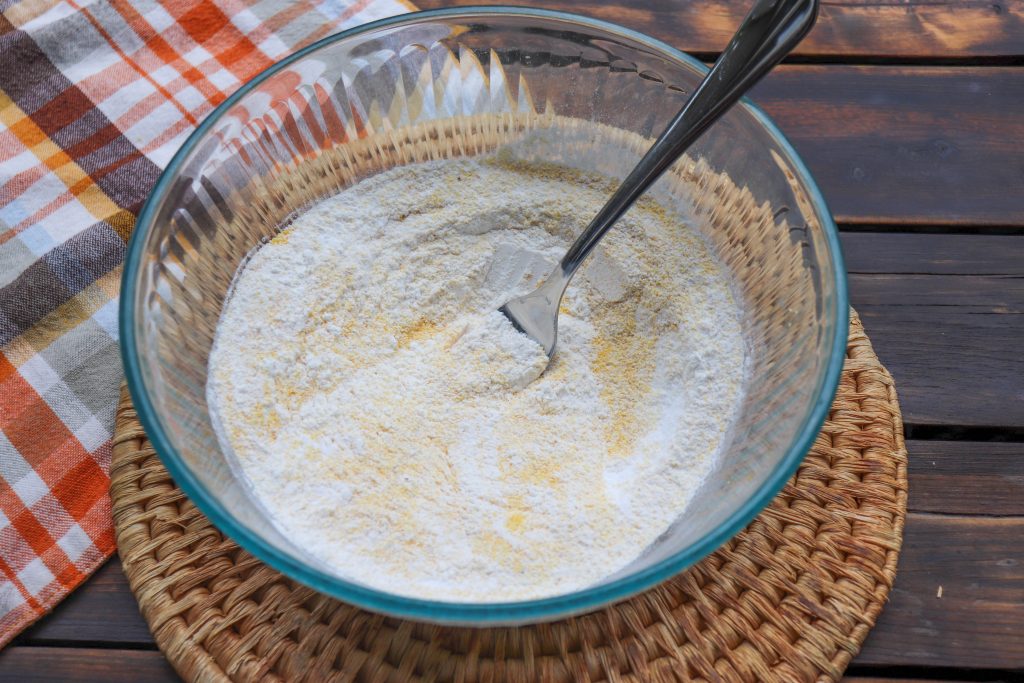
2. Combine dry ingredients in the large mixing bowl.
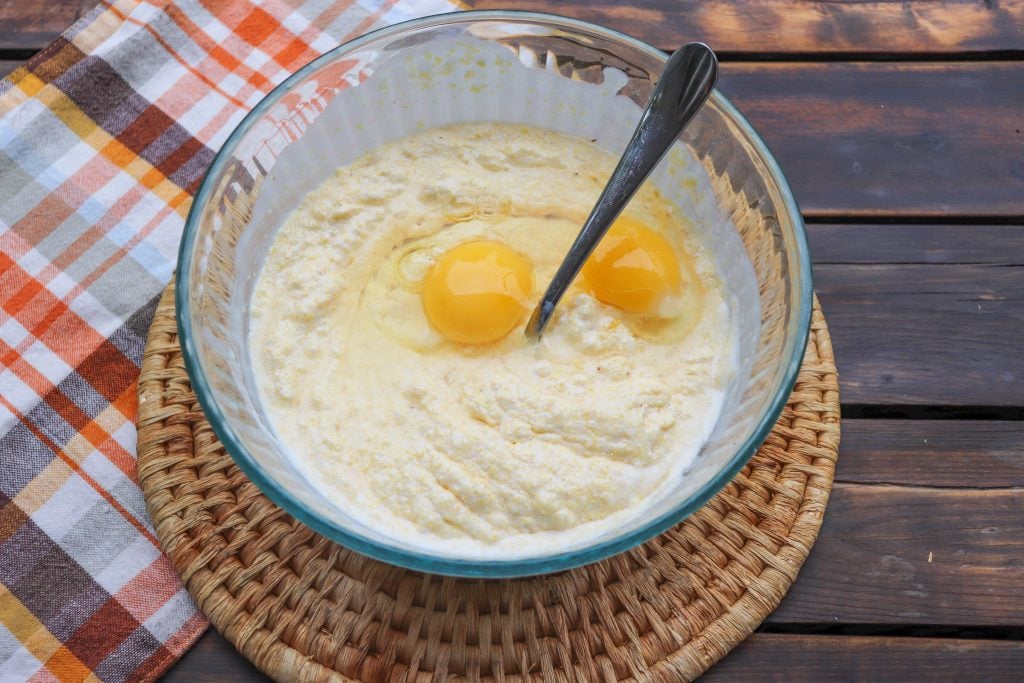
3. Add wet ingredients; melted butter, buttermilk, and eggs.
4. Mix until well combined. It should look like pancake batter, thick and a bit lumpy.
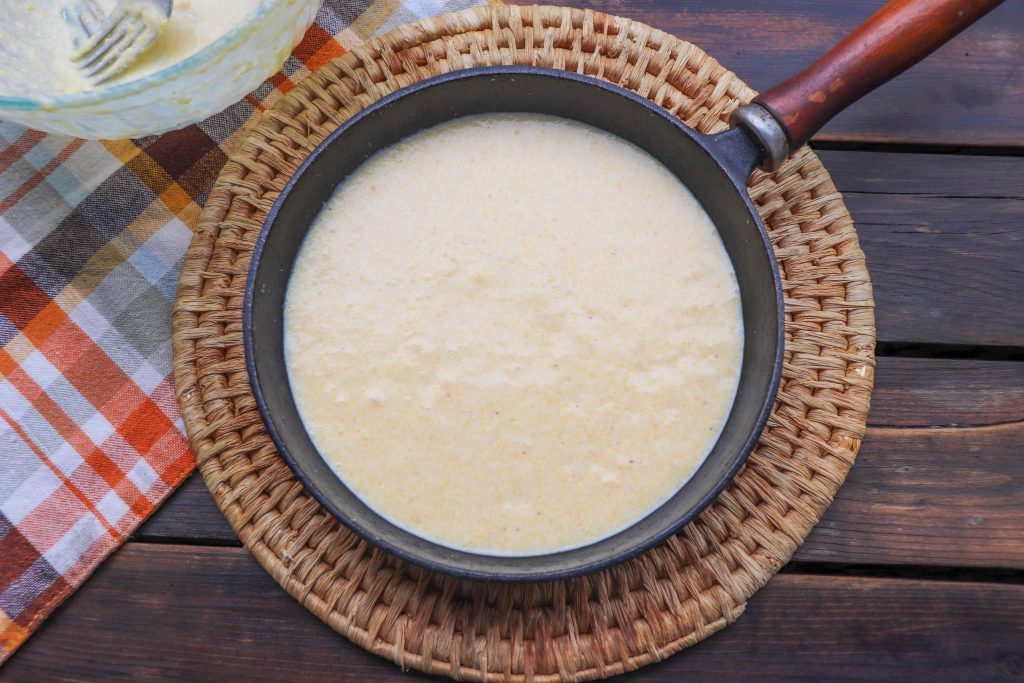
5. Pour the corn bread batter into the cast iron skillet.
6. Place the skillet into the oven and bake for 25 minutes.
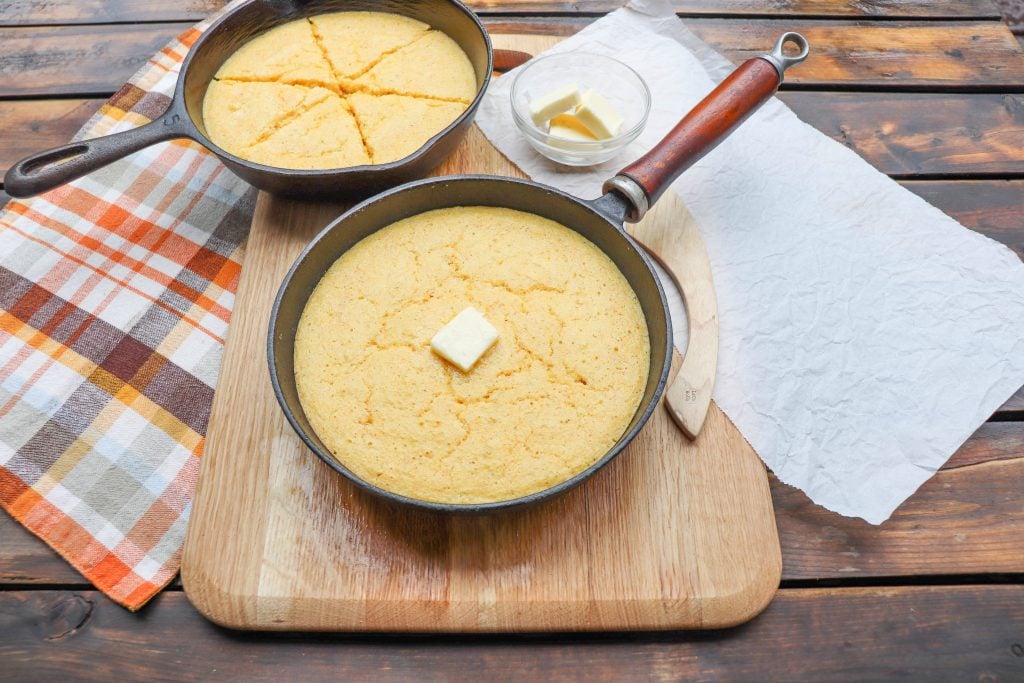
7. Remove from the oven, being careful as the handle will be hot.
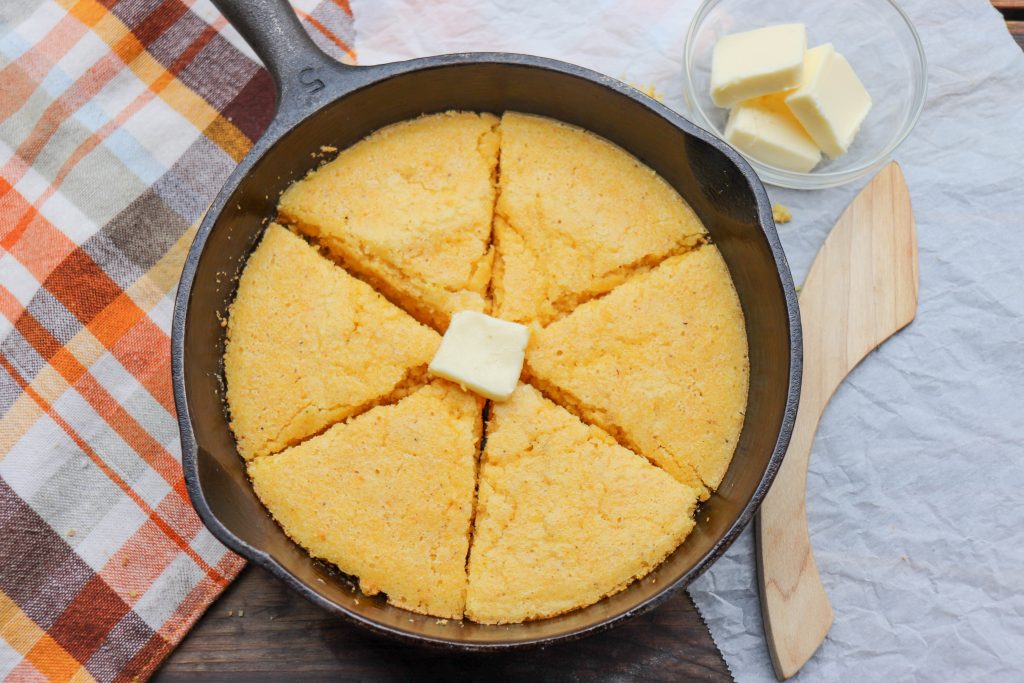
8. Allow the bread to cool before cutting it into wedges.
Tips and Tricks
- Try switching out half of the buttermilk for heavy cream.
- No buttermilk? No problem! Combine one tablespoon of lemon juice or vinegar with regular milk to equal one cup. Let it sit for a few minutes and you’re good to go.
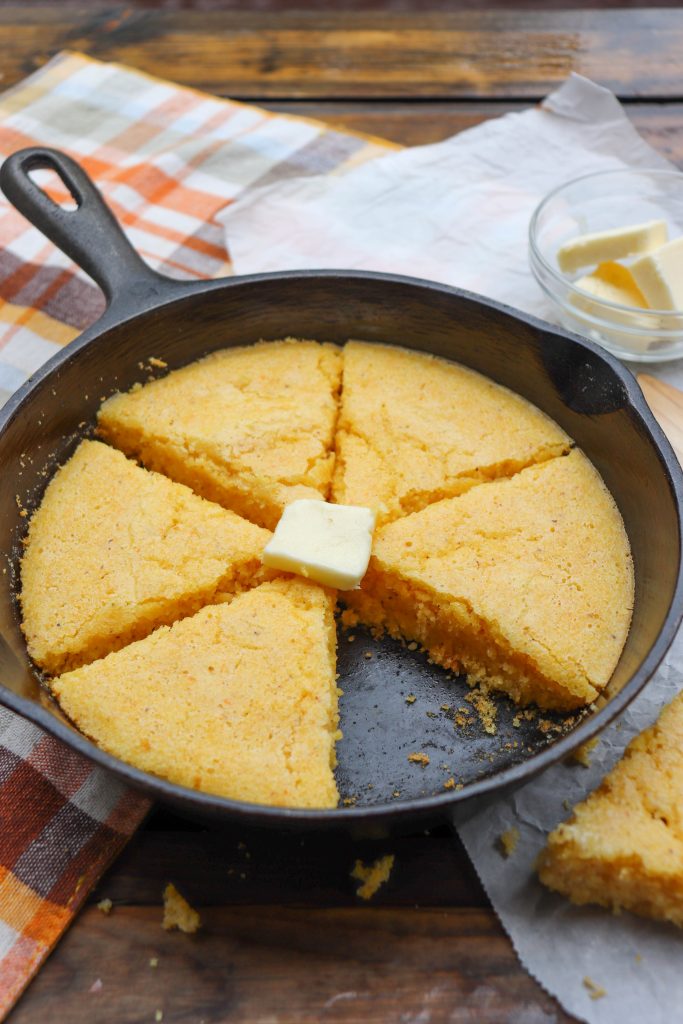
- Vegetable oil, bacon fat, coconut oil, or avocado oil can all replace the melted butter in this recipe.
- Heat your cast iron pan in the oven while you mix up your batter. When you pour the cornmeal mixture into the hot skillet, the heat will help create golden brown crispy edges.
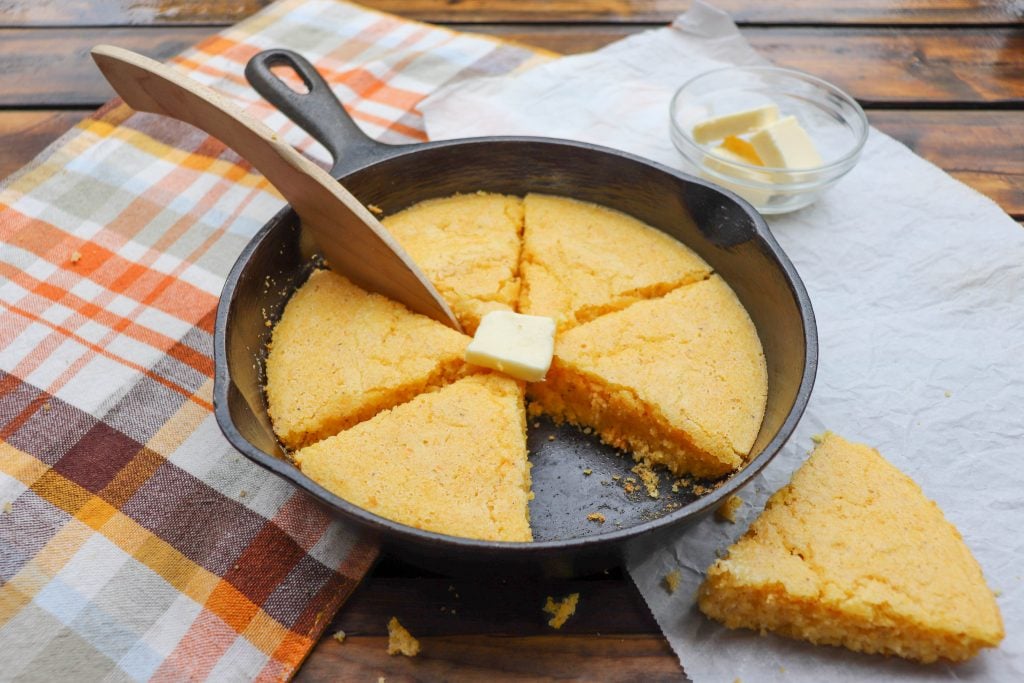
- In our opinion, a 10-inch cast iron skillet yields the best results with this homemade corn bread. However, if you don’t have one, try a regular non-stick skillet, baking dish, or even corn bread muffins.
- Why not try southern corn bread dressing next Thanksgiving?
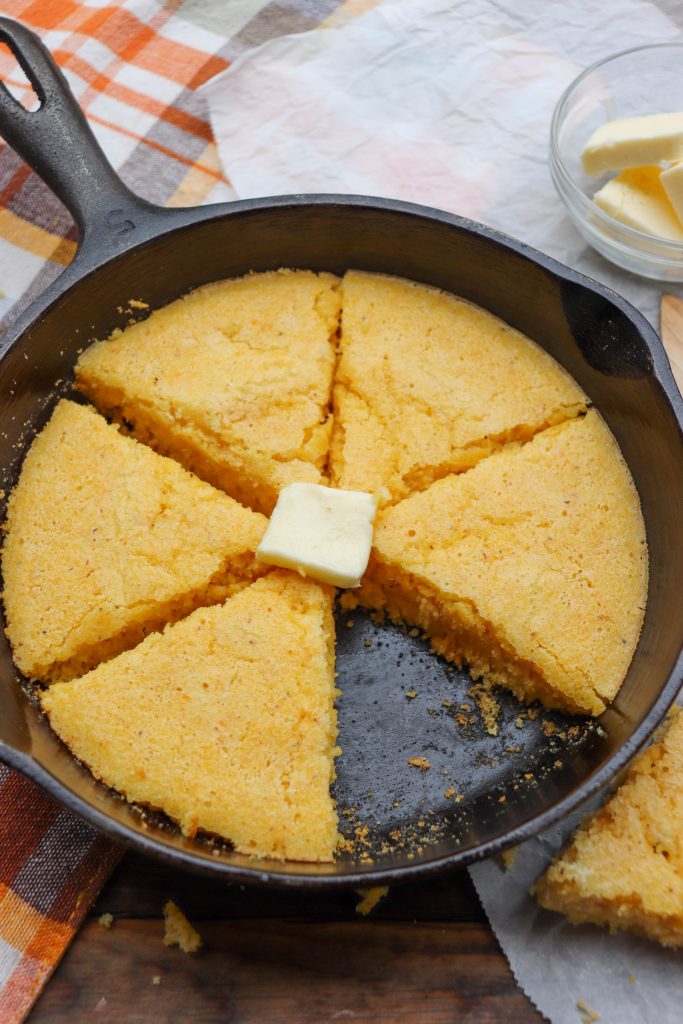
- When setting the skillet on the table for serving, place an oven mitt over the handle to prevent accidental burns.
- Leftovers can be stored at room temperature, either in an airtight container or covered tightly with plastic wrap.
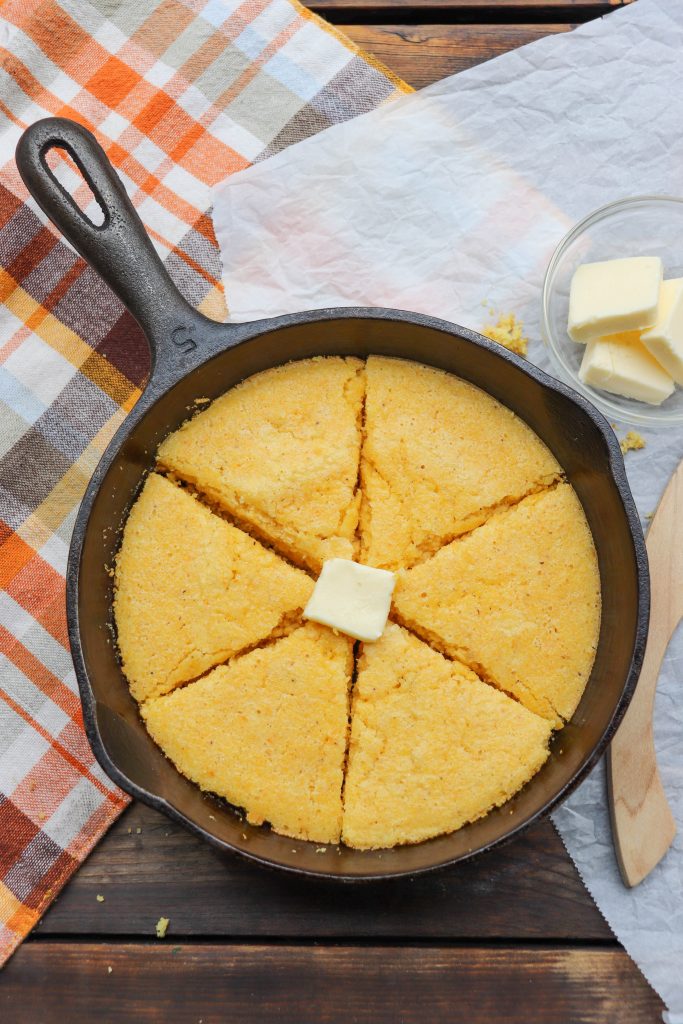
Whether you want to enjoy your cast iron skillet corn bread with a steaming bowl of homemade chili or with butter, honey, and a tall glass of milk, today’s simple recipe is sure to become your new favorite.
Serve this corn bread with our smoked brisket, BBQ ribs, or skillet steak recipe. Enjoy!
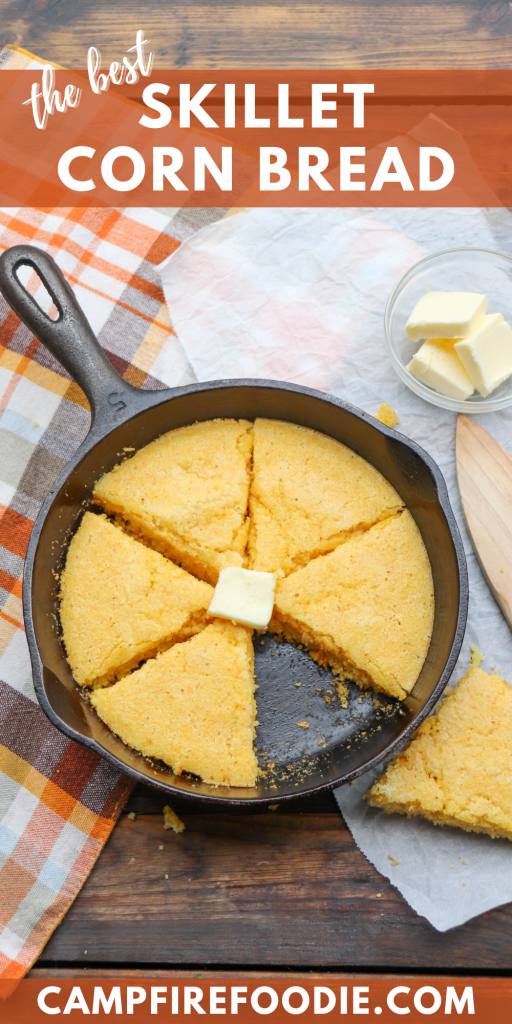
If you love this southern skillet corn bread recipe, please give it a 5-star rating by clicking on the stars in the recipe card below and help us share it on Facebook and Pinterest.
Southern Skillet Corn Bread
Ingredients
- 3/4 cup all-purpose flour
- 3/4 cup yellow cornmeal
- 1 Tbsp white sugar*
- 1 tsp baking powder
- 1 tsp baking soda
- 1/2 tsp salt
- 5 Tbsp butter melted
- 1 cup buttermilk
- 2 eggs
Instructions
- Preheat oven to 350 degrees F. Season the skillet with olive oil.
- Combine dry ingredients in the large mixing bowl.
- Add wet ingredients; melted butter, buttermilk, and eggs.
- Mix until well combined. It should look like pancake batter, thick and a bit lumpy.
- Pour the corn bread batter into the cast iron skillet.
- Place the skillet into the oven and bake for 25 minutes.
- Remove from the oven, being careful as the handle will be hot.
- Allow the bread to cool before cutting it into wedges.
Notes
- Sugar in corn bread is controversial, but we love it in this recipe. It doesn’t make the bread sweet, but rather more flavorful.
- Be sure that the skillet is well seasoned with olive oil before using. This will help to prevent the bread from sticking to the pan.
- Try switching out half of the buttermilk for heavy cream.
- No buttermilk? No problem! Combine one tablespoon of lemon juice or vinegar with regular milk to equal one cup. Let it sit for a few minutes and you’re good to go.
- Vegetable oil, bacon fat, coconut oil, or avocado oil can all replace the melted butter in this recipe.
- Heat your cast iron pan in the oven while you mix up your batter. When you pour the cornmeal mixture into the hot skillet, the heat will help create golden brown crispy edges.
- In our opinion, a 10-inch cast iron skillet yields the best results with this homemade corn bread. However, if you don’t have one, try a regular non-stick skillet, baking dish, or even corn bread muffins.
- Why not try southern corn bread dressing next Thanksgiving?
- When setting the skillet on the table for serving, place an oven mitt over the handle to prevent accidental burns.
- Leftovers can be stored at room temperature, either in an airtight container or covered tightly with plastic wrap.